
Your home in Spain
From the first idea to the keys.
Inside
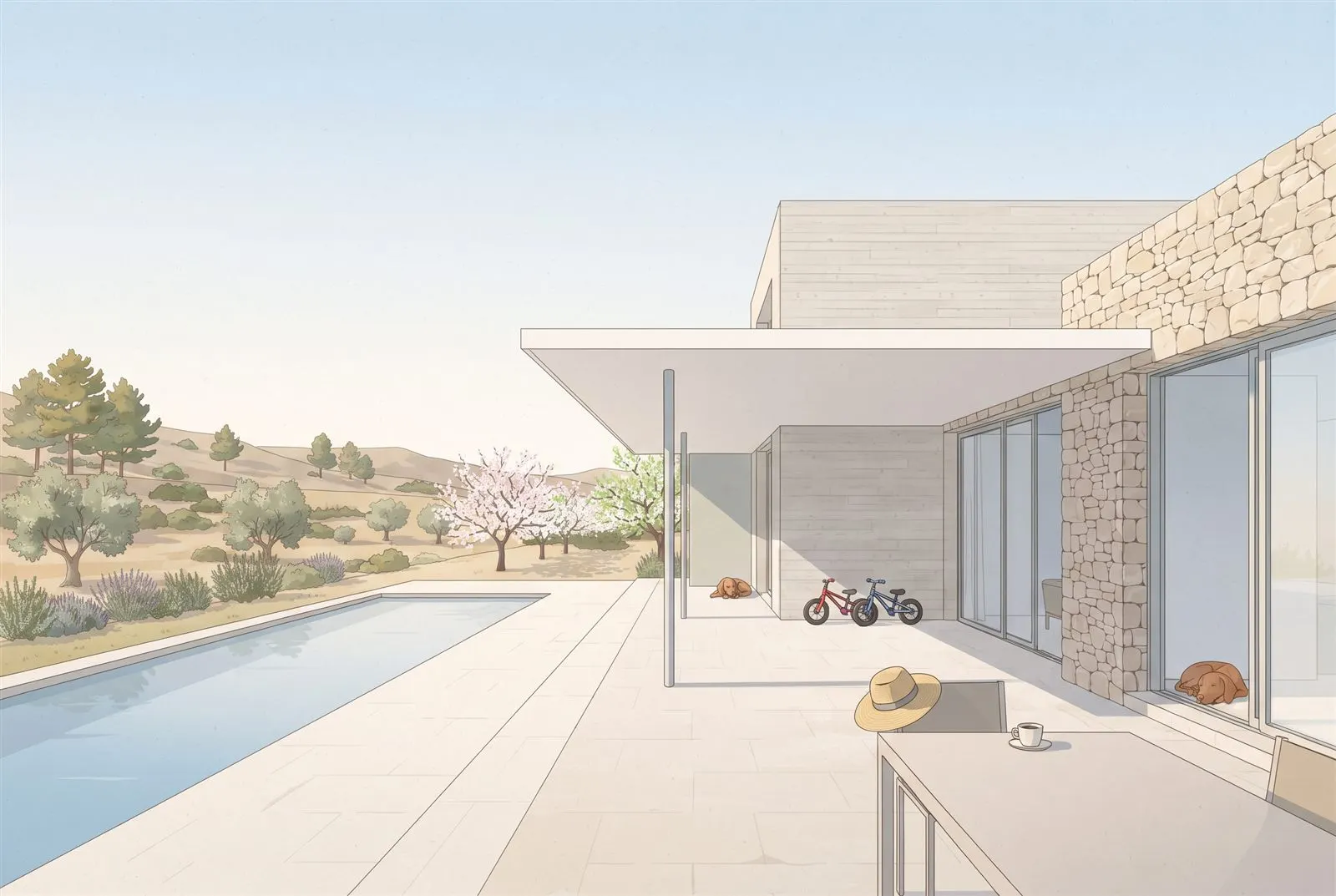
Picture your first morning.
It starts here — with one question:
How do you get from this page to that morning, without losing sleep on the way?
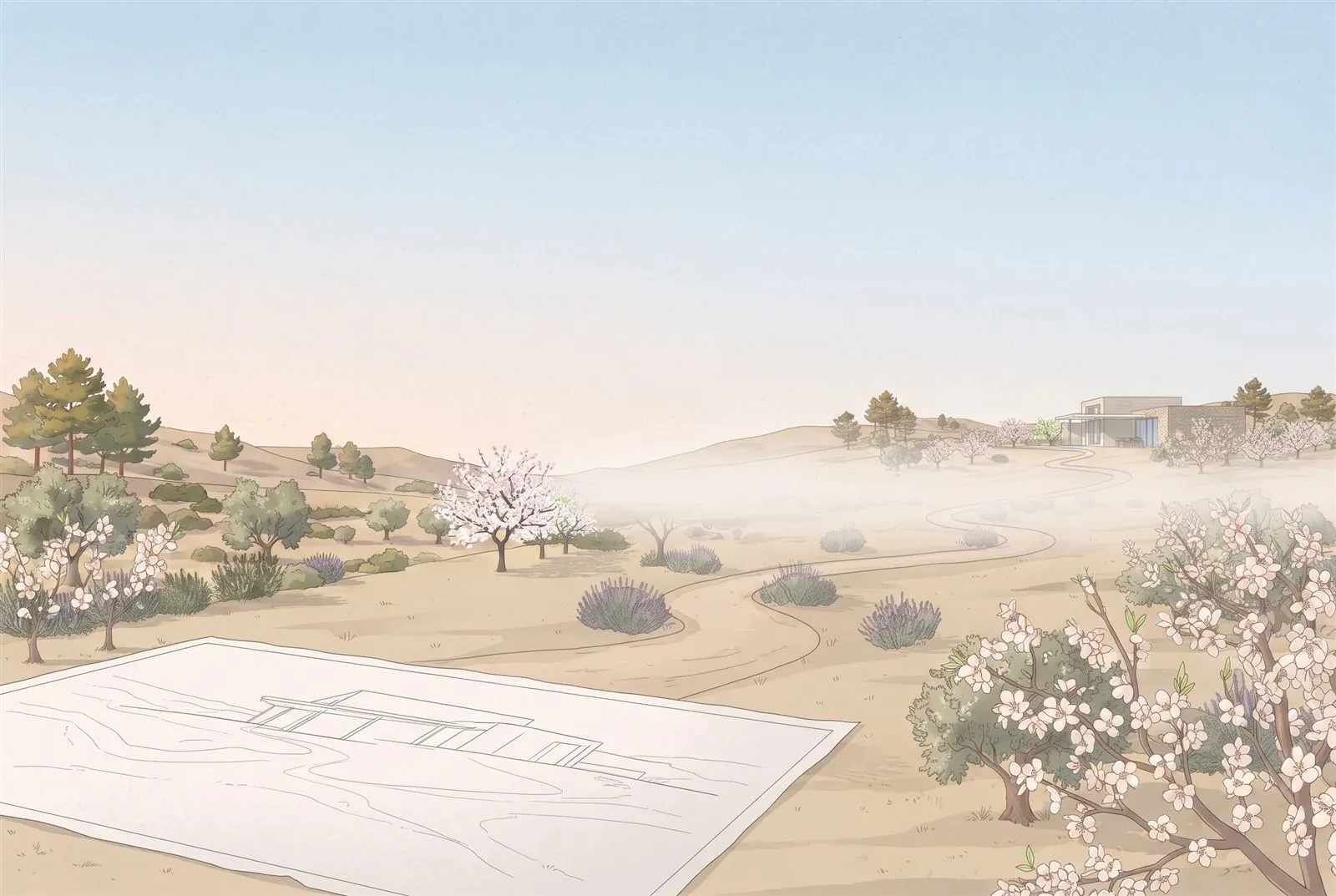
Most of the risk in building a home isn’t in the concrete.
It’s in what nobody explained before you signed.
Who approves each stage. What you pay, and when. What happens if a date slips.
At home, you’d know exactly who to ask. Here the rules, the paperwork and the language are new — and that gap is where most bad experiences start.
This guide closes the gap. It’s what we would want our own family to know before building in Spain — whoever they chose to build with.

Ready-built, or built for you?
Both are good ways to have a home in Spain. They are not the same thing.
Buying ready-built
You can walk through it before you pay, and you move in sooner.
But someone else chose the plot, the orientation, the layout and the finishes — and the price carries the margin of everyone between you and the builder.
Building on your own plot
It takes longer. And a few steps — the building licence, connecting water and electricity — depend on the town hall and the utility companies, not on any builder. That’s the honest part.
But it’s the only way the house is yours from the very first line: your plot, your light, your rooms. You buy directly from the builder, with nobody’s margin in between. And a good contract turns the unknowns into a timeline you can read.
If building is your path, the next pages show exactly how it works: who does what, where your money goes, and what to get in writing.
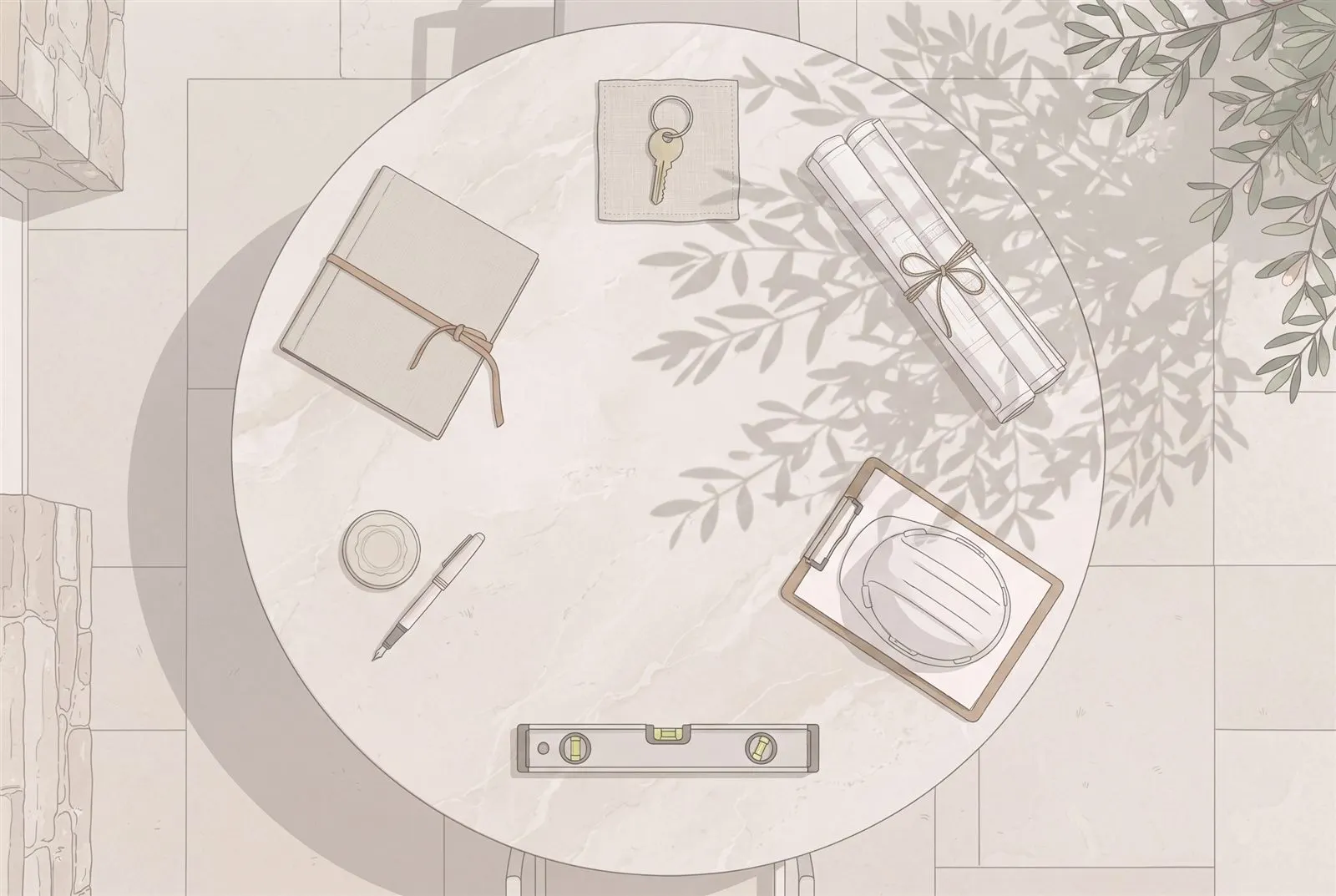
Who is who
Building a home in Spain means a small team around one table. Knowing who sits where is half the calm.
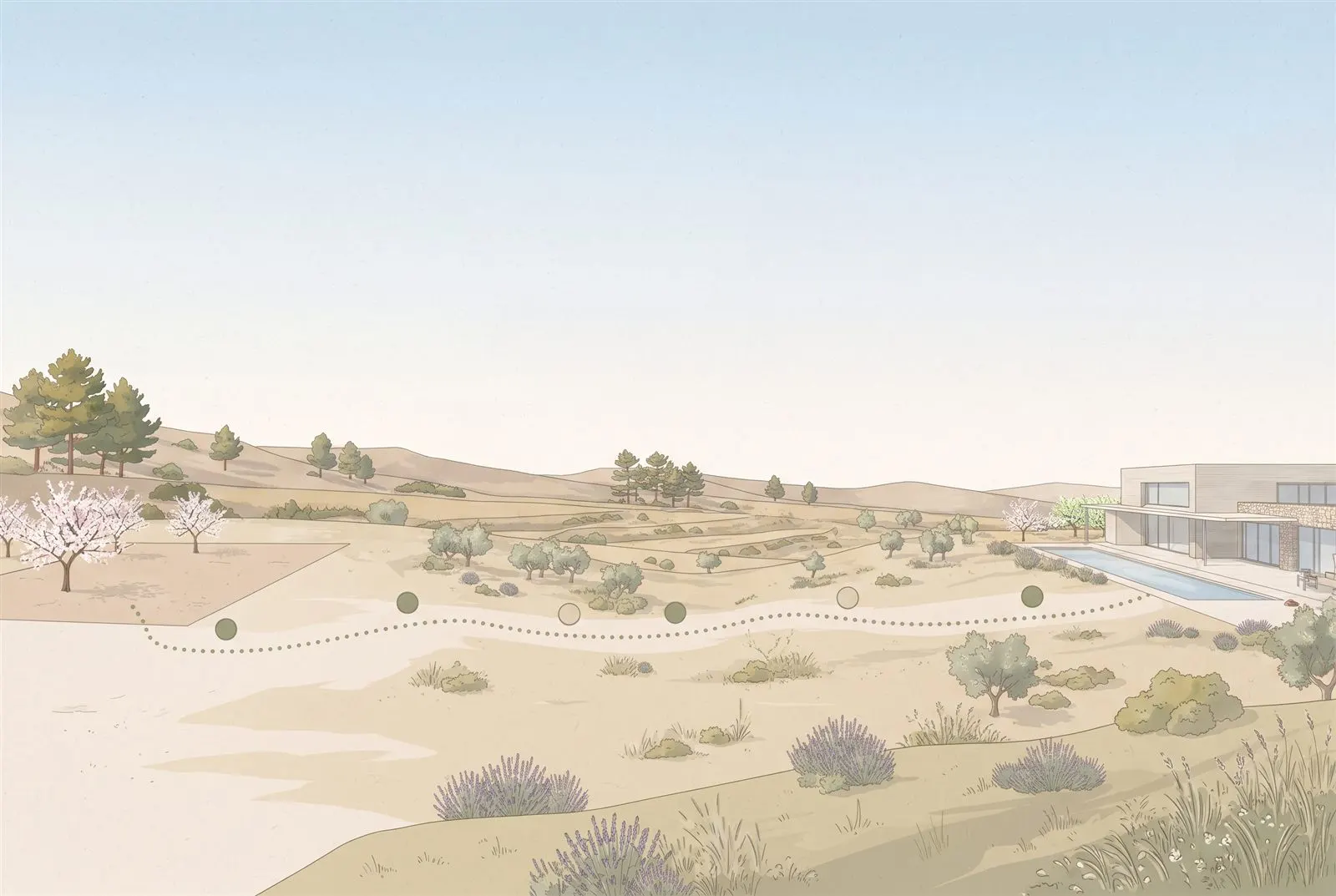
The road to your keys
- The plotCheck what it has and what it needs — before you buy it.
- The projectYour home, designed and drawn.
- The building licenceIssued by the town hall.
- The contractPrice, scope, timeline and payments, in writing.
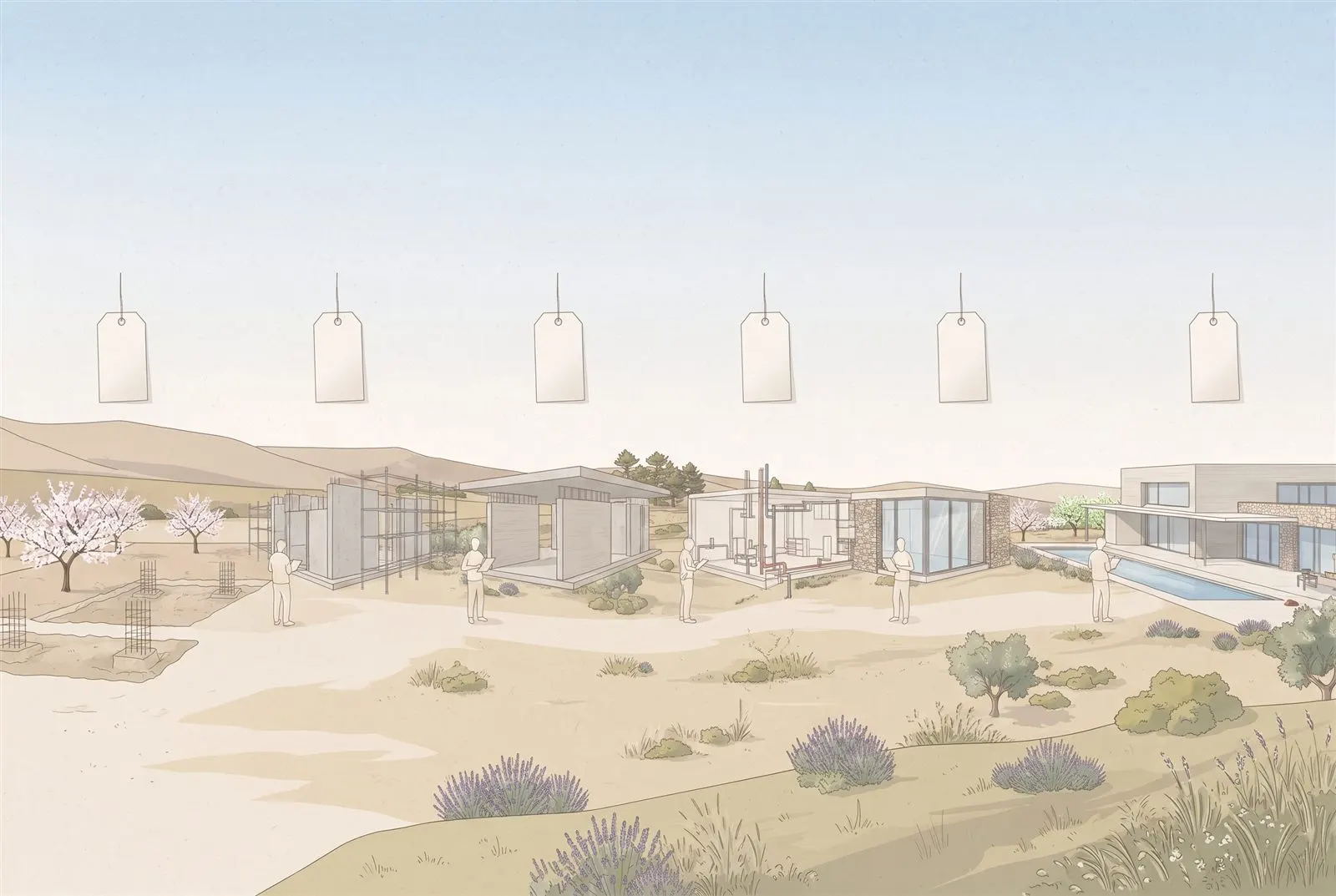
- The build, stage by stageEach stage checked and certified.
- First-occupation licence and connectionsTown hall and utility companies.
- Your keys
A good builder shows those steps separately in your calendar — and commits only to what they control.
Your money never goes ahead of your house.
You pay in stagesEach payment is linked to a stage of the build that is already finished.
Someone independent checksBefore you pay, the site director — who doesn’t work for the builder — certifies that the stage is done.
Distance changes nothingIt works exactly the same whether you live next door or two thousand kilometres away.
No stage finished, no certificate. No certificate, no payment.
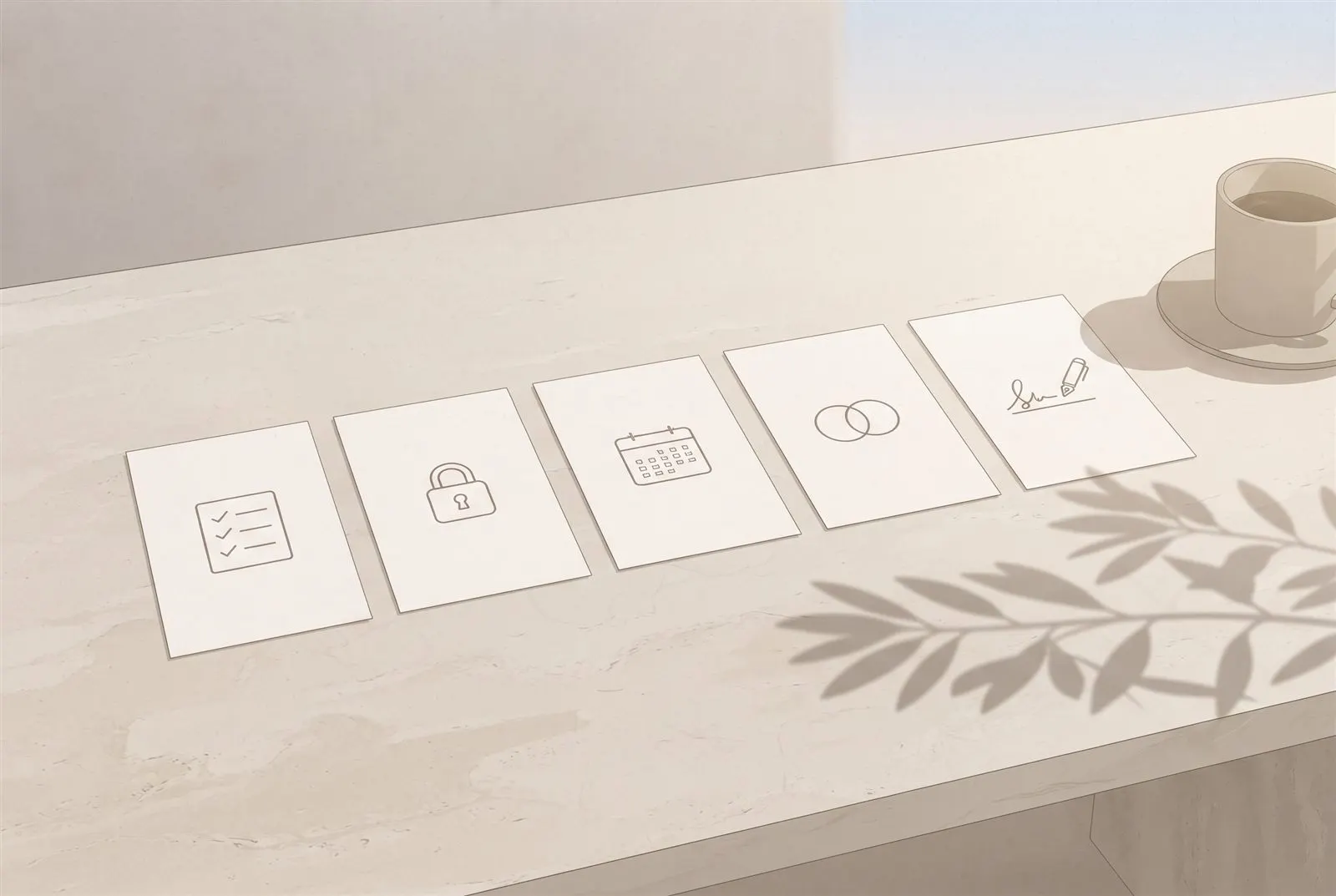
Five things to get in writing
From any builder — including us.
If a builder gives you these five in writing, you can compare offers properly. If they won’t, that tells you something too.
Before you buy a plot
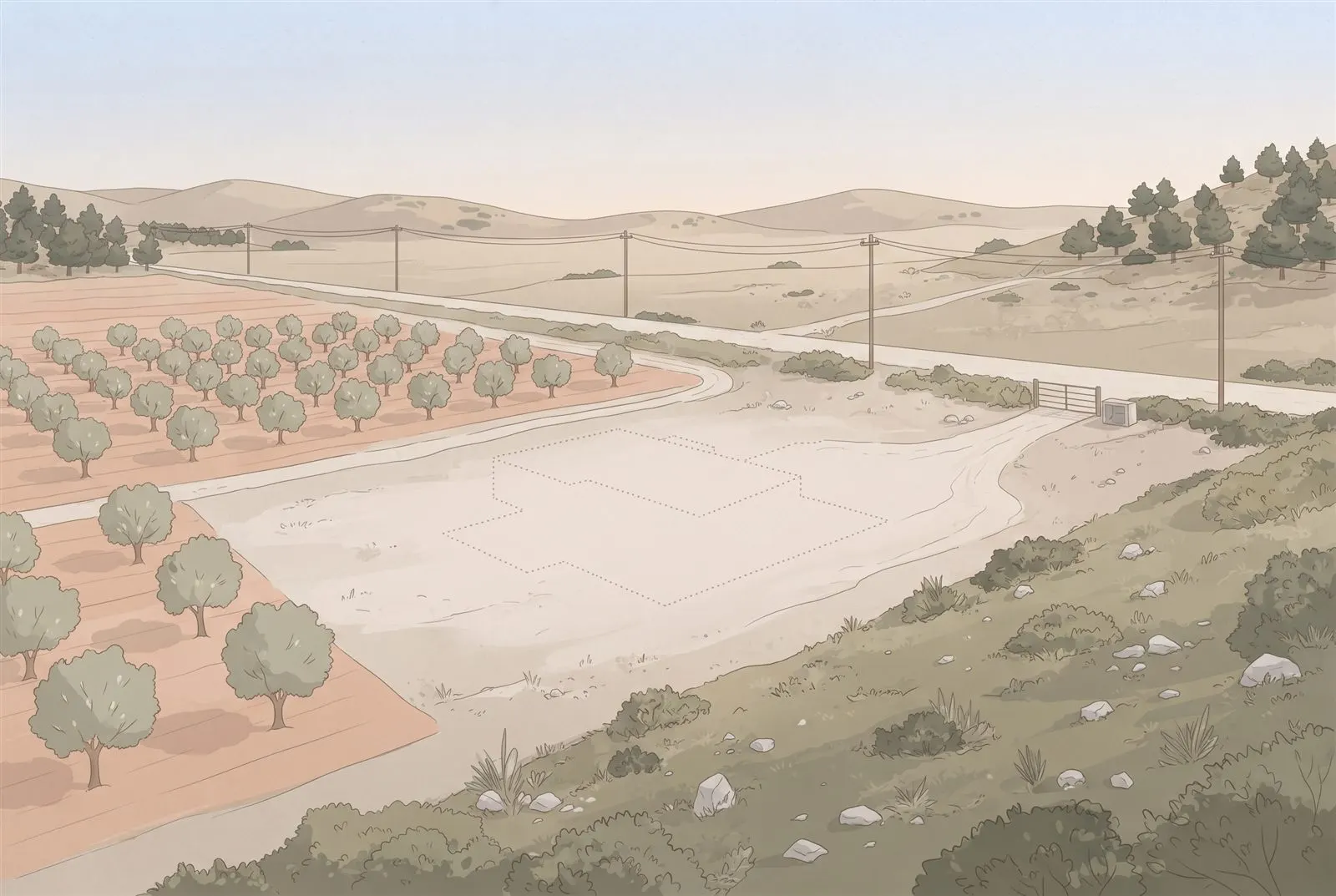
A beautiful view is the first reason to fall in love with a plot. These are the questions to ask before you do.
- Can a house be built here? Rural land has its own rules. In the Alicante area a house on rural land needs a plot of at least 10,000 m²; in the Murcia region, at least 5,000 m². Ask the town hall for the planning status in writing.
- How do you get there? A legal access, usable all year.
- Water. Is there a mains connection nearby, and how far?
- Electricity. A supply at the boundary — or your own solar system?
- Wastewater. Without mains drainage, a private treatment system is required to live in the house legally.
- The ground. Slope, rock, soft soil — it changes the foundations.
Our packs adapt the house to what each plot has and what it lacks: from a plot with every connection at the gate, to one that needs its own water, energy and wastewater treatment. You don’t start from zero; you start from a solution already thought through.
No more drawings. This is what it looks like for real.
So far you have seen the idea. From here on: the build, and the first morning in a finished home.

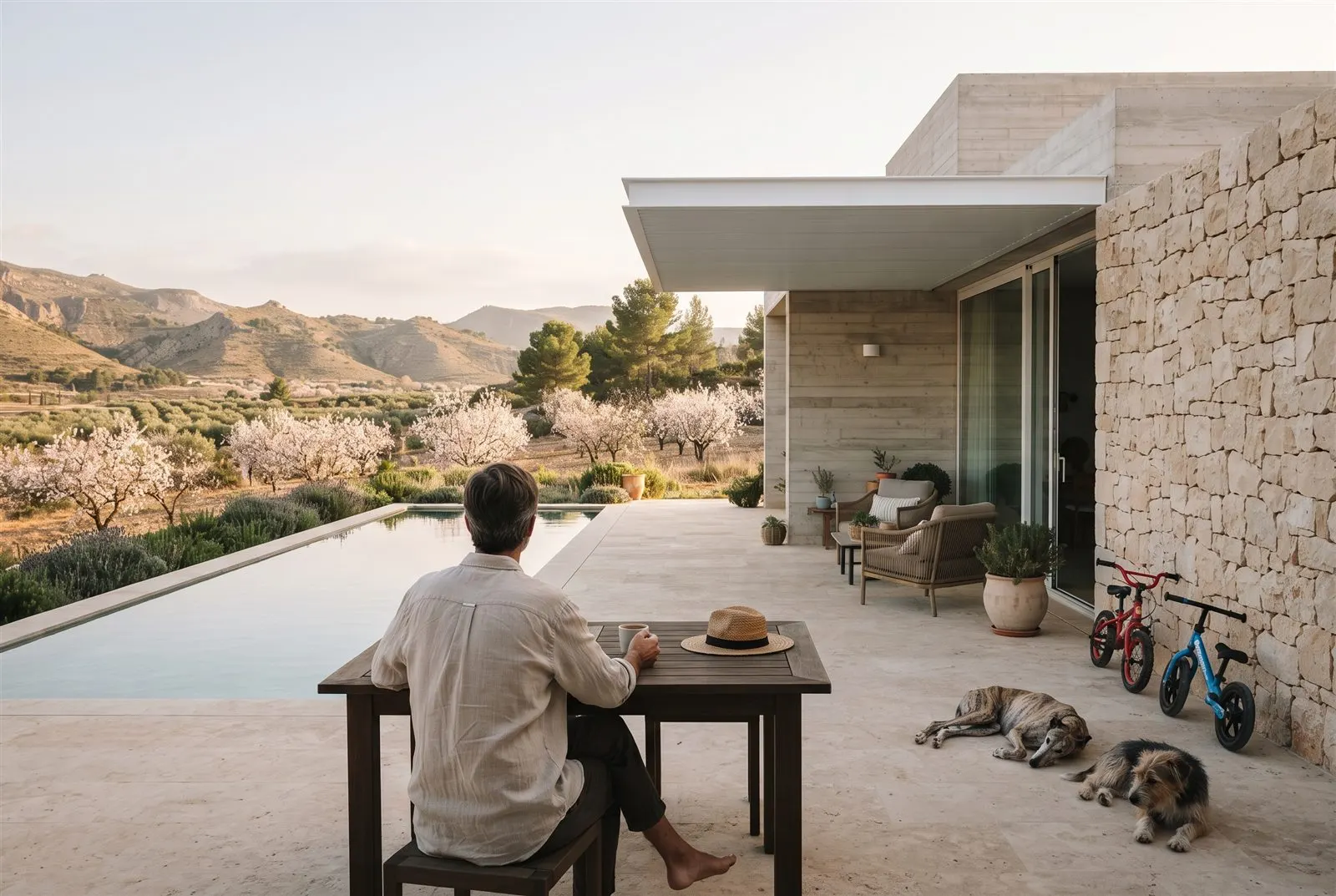
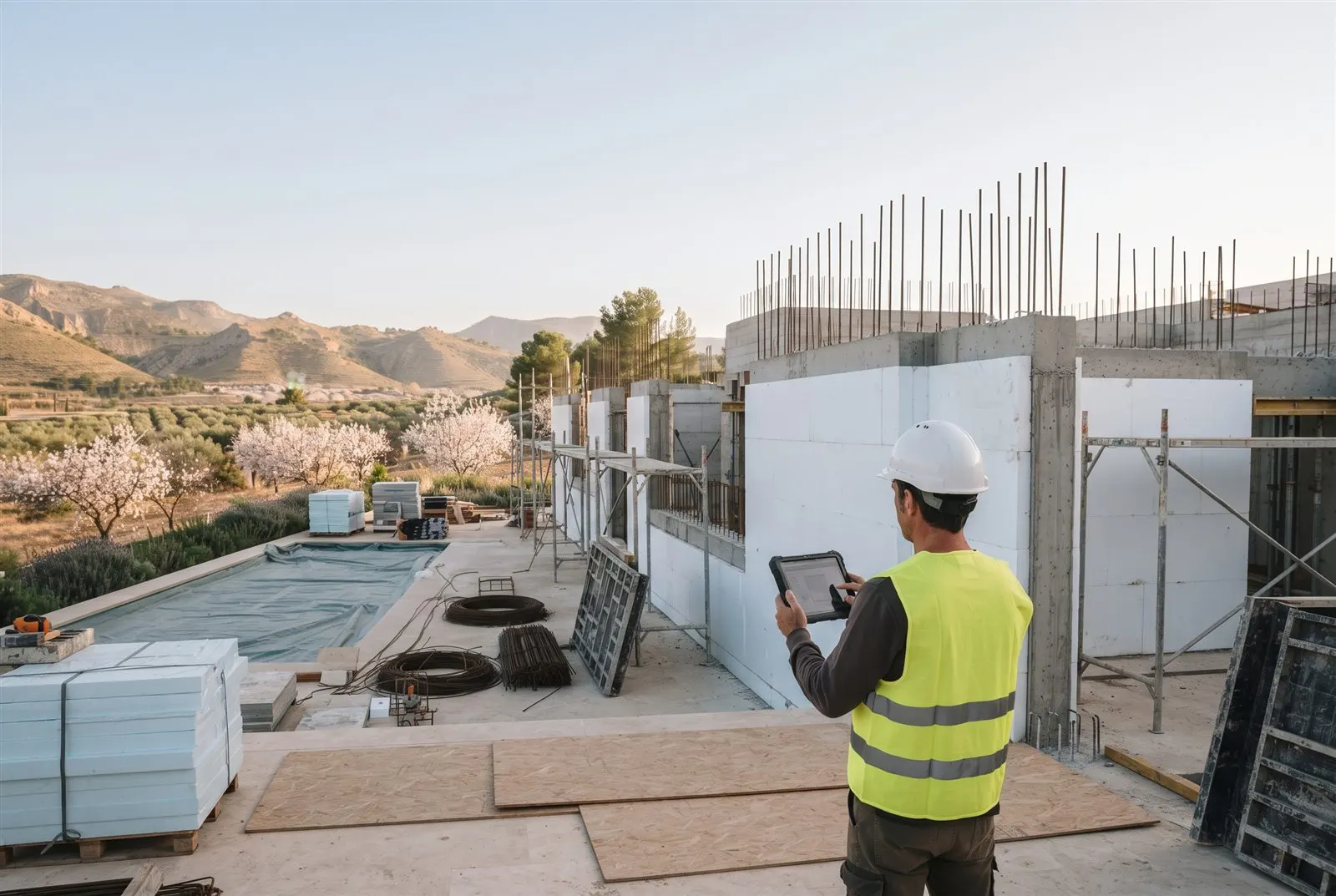
Following your home from far away
Distance shouldn’t mean guessing.
You build together with us, even from another country.

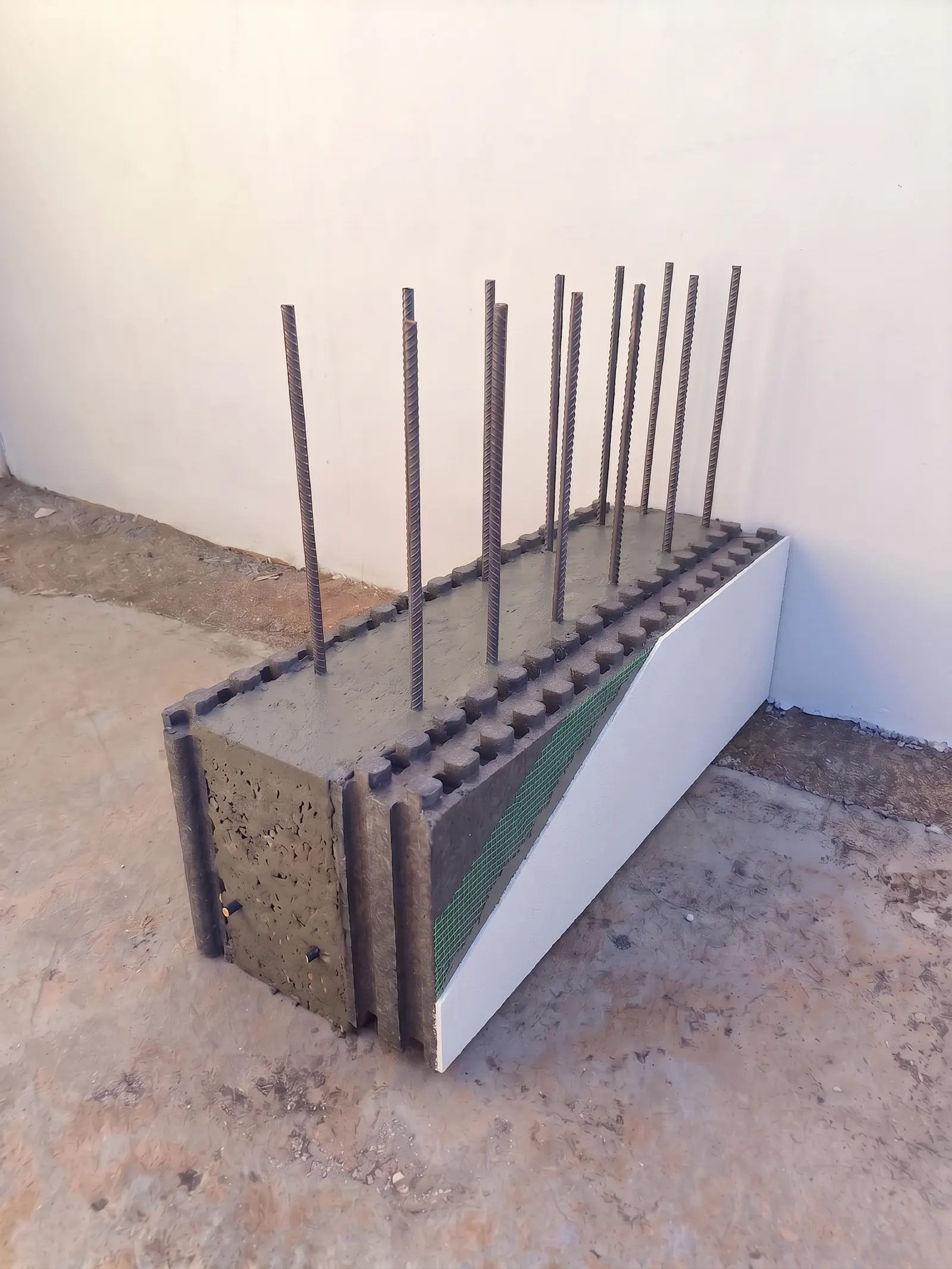
The people behind the wall
We are a family of builders from the Vinalopó valley: three generations building here since the 1960s.
We have built homes for families and public works for town halls — and we still drive past many of them every week. Today we build with a reinforced concrete wall insulated on both sides: the Everhome wall. We show you what’s inside it before you decide anything.
We live where you want to live.
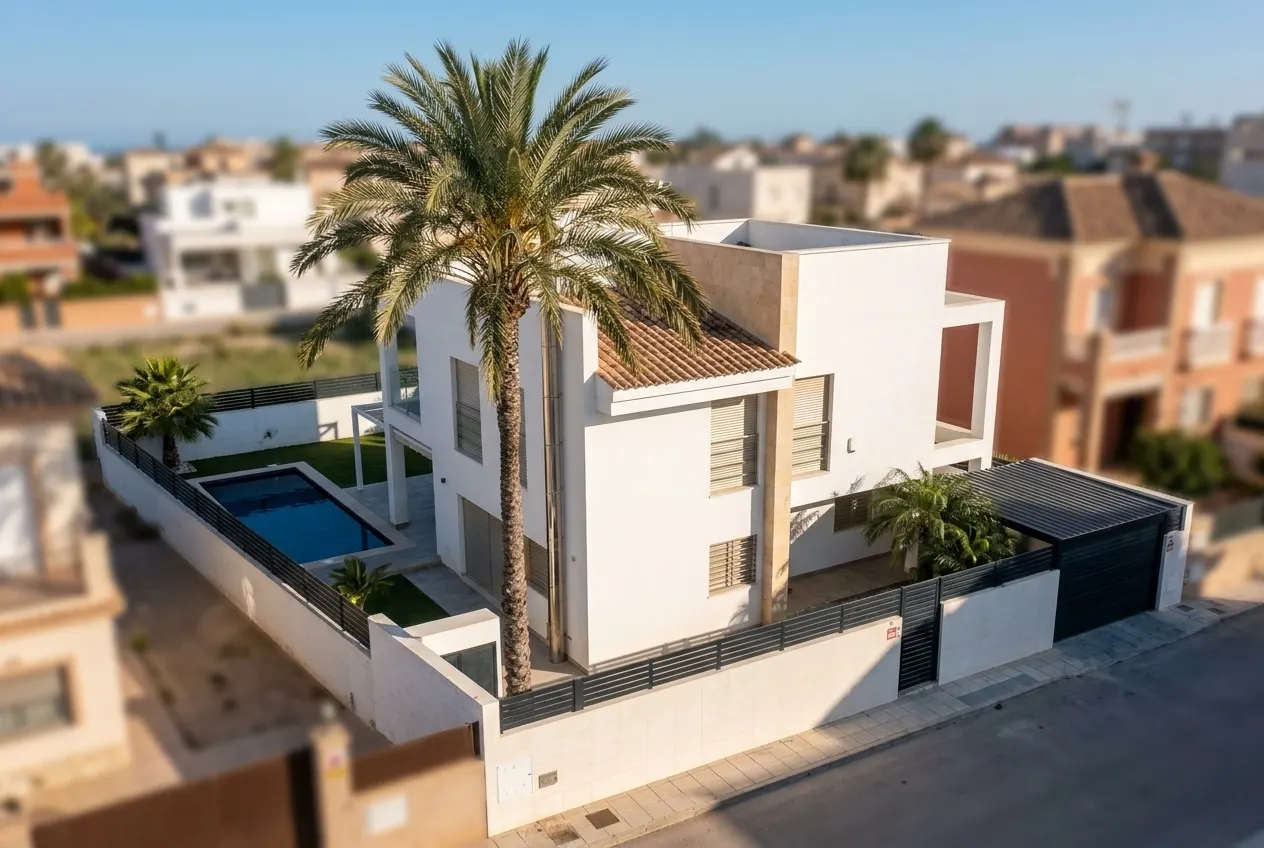
When your house is finished, you won’t be buying from someone who has moved on to the next coast. We’ll be here — a few kilometres away.
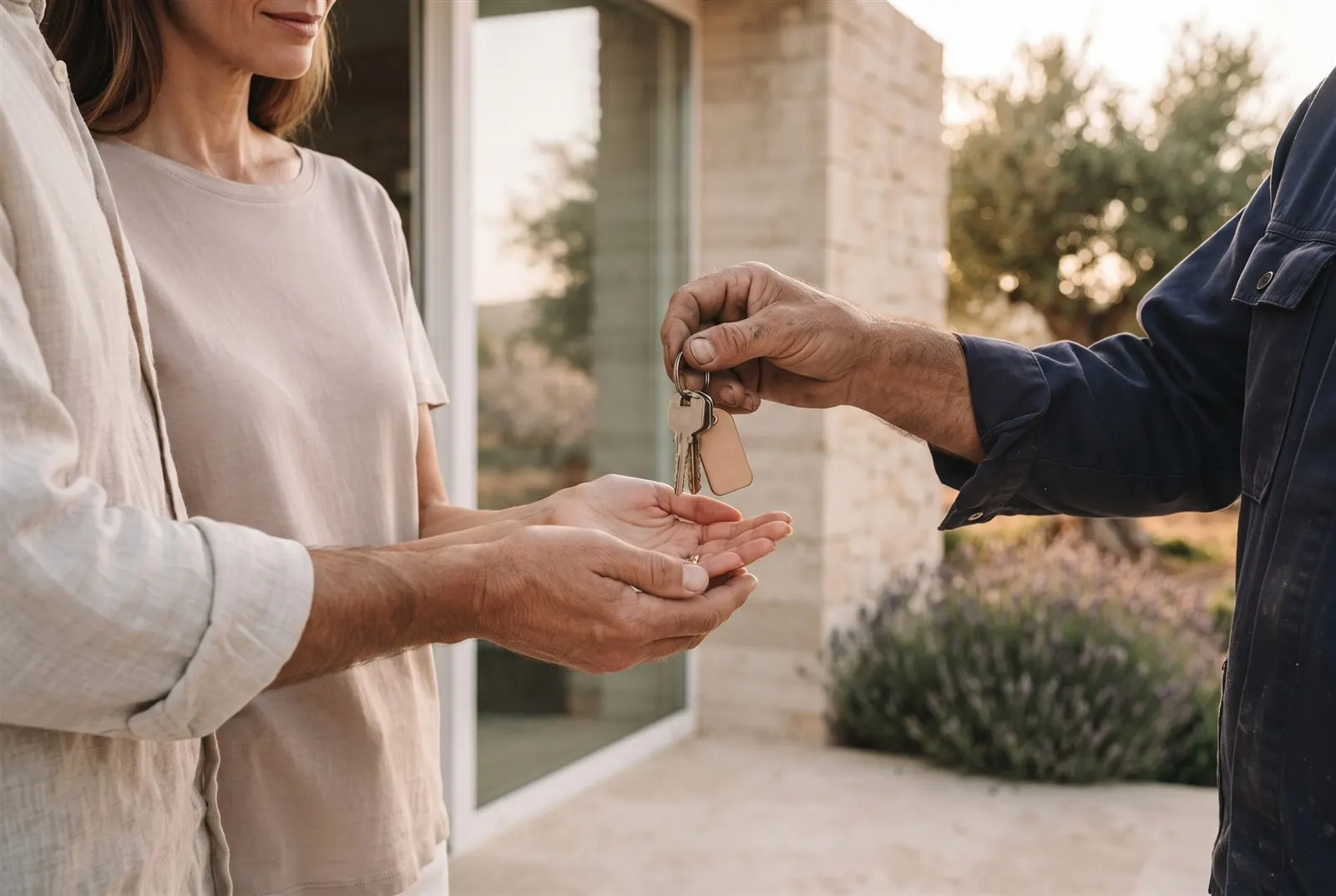
After the keys
Handing over the keys is not the end of the story.
We come back — three months after you move in, after one year, and after your first winter — to see how the house is behaving and to fix anything that needs it.
A house is a long relationship. So is ours.
You now know who does what, where your money goes, and what to ask for in writing. The next step is simple, and it costs you nothing.
Tell us where your plot is. We’ll tell you what it needs — even if you end up building with someone else.
Send us your “My plot” page →What this guide doesn’t cover. Taxes as a non-resident, visas and residency, and international money transfers are important — and they depend on your personal situation. For those, speak to your own lawyer or tax adviser in Spain.
The illustrations are artistic recreations, not photographs of a finished house.